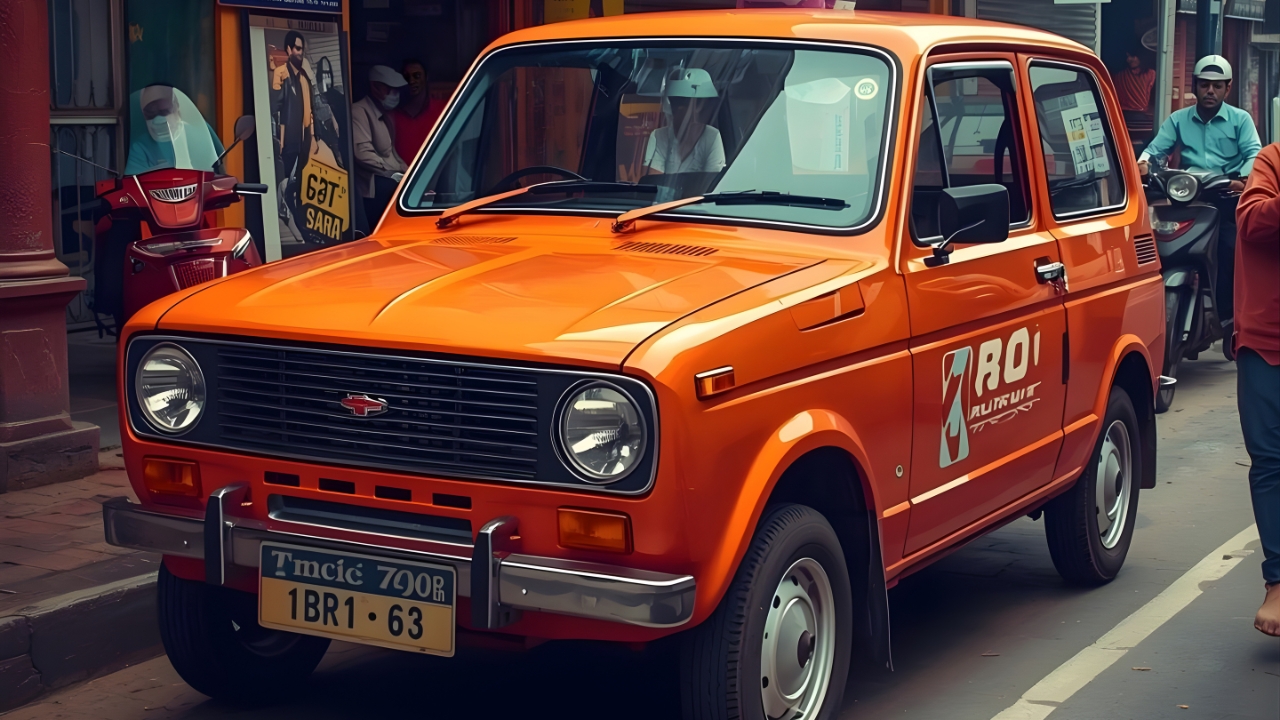
Maruti 800 : The Maruti 800 wasn’t just a car; it was the spark that ignited personal mobility for millions of Indians.
Launched amid skepticism in 1983, this tiny hatchback transformed streets clogged with Ambassador taxis into playgrounds for the middle class.
A Humble Beginning in Turbulent Times
Back in the early 1980s, India’s roads were ruled by hulking relics like the Hindustan Ambassador and Premier Padmini, relics that guzzled fuel and begged for constant repairs.
Enter the Maruti 800, born from a bold joint venture between the Indian government and Japan’s Suzuki Motor Corporation.
On December 14, 1983, Prime Minister Indira Gandhi handed the keys of the very first unit to Harpal Singh, an Indian Airlines employee who won it in a lucky draw after over 120,000 bookings flooded in within months.
Priced around Rs 47,500, it was a steal compared to its rivals, making car ownership feel within reach for salaried families dreaming beyond two-wheelers.
Also Read: Realme 16 Pro Plus 144Hz AMOLED display, 7000mAh battery with 80W fast charging
What set it apart was its no-frills Japanese engineering: a peppy 796cc three-cylinder engine churning out 39 PS, front-wheel drive, and a lightweight monocoque body that zipped to 140 km/h tops while sipping just 16 kmpl.
Disc brakes up front and a floorshift gearbox felt futuristic; suddenly, driving became fun, not a chore.
Conquering Hearts and Highways
The 800 didn’t just sell; it created a frenzy. Waiting lists stretched three years, and it became a status symbol—”Mera Sapna, Meri Maruti,” as ads cheekily proclaimed.
Women loved its easy handling, young couples its compact charm for unchaperoned dates, and families its reliability in pothole-ridden chaos.
Over 31 years, Maruti built nearly 2.9 million units, with 2.66 million sold in India alone, dwarfing competitors and forcing them to modernize or fade.
Also Read: Tecno Spark Go 3 smartphone 5000mAh battery with 128GB storage just in ₹8,999
Updates kept it fresh: a sleeker body in 1986 borrowed from the Suzuki Alto, multi-point fuel injection in the 2000s for better efficiency, and even a rare three-speed auto option.
It spawned a service network that blanketed India, creating jobs and ancillary industries from spare parts to parking lots. By the 1990s, colorful variants like Firebrick Red lined streets, turning urban India vibrant and mobile.
The Bitter Farewell and Lingering Echoes
By 2014, stricter safety norms and Bharat Stage IV emissions proved too much for the aging warrior. The last Firebrick Red unit rolled off Gurgaon’s assembly line on January 18, bound for a Shillong dealership, marking the end of an era.
Production halted, but spares promised for a decade kept fans happy. The Alto 800 stepped in as successor, but it lacked the original’s raw nostalgia.
Also Read: Nissan X-Trail premium 7-seater SUV, 1498cc turbo petrol engine with high safety features
Even today, in March 2026, the 800 haunts enthusiasts. Modified classics fetch premiums on used markets, and social media buzzes with revival pleas—imagine a sub-Rs 5 lakh reboot shaking up entry-level EVs.
YouTube tributes rack up views, sharing tales of first drives and family road trips. Its scrappage under new policies tugs heartstrings, yet it paved the way for Maruti’s dominance, now over 50% market share.
Why It Still Matters
The Maruti 800 democratized driving, shifting India from scooter hordes to car queues, boosting GDP through auto ecosystems. It symbolized aspiration: from “roti, kapda, makaan” to adding “Maruti” as the fourth pillar.
Also Read this – Samsung Galaxy Z Fold7 5G Next-Gen foldable phone, 200MP camera and 7.6-Inch display
In a EV-crazy world, whispers of a 2026 electric reboot fuel hopes, blending heritage with zero-emissions tech for megacity warriors. Spot an old 800 weaving through Delhi traffic? That’s not rust—it’s legend enduring.
Maruti 800
The Maruti 800’s story is India’s automotive coming-of-age tale—a plucky underdog that outran giants, forever changing how we move. Though retired, its spirit revs on, reminding us that true icons never fade.