Kia Sonet : Kia’s Sonet has quietly become one of the most influential compact SUVs in India, and its 2026 model‑year update is anything but cosmetic.
With new automatic variants under ₹10 lakh, refreshed features, and a sharpened pricing strategy, the Sonet is now targeting both first‑time buyers and urban professionals who want refinement without extravagance.
New automatic options under ₹10 lakh
The biggest headline of the MY26 update is the arrival of two new automatic variants in the sub‑₹10 lakh bracket.
Kia has introduced the HTE (O) variant with a 1.5‑litre diesel engine paired to a 6‑speed automatic transmission, listed at ₹9.78 lakh (ex‑showroom), and a turbo‑petrol HTE (O) version with a 7‑speed dual‑clutch automatic at ₹9.89 lakh.
These entries are tailored to India’s choked city traffic, where stop‑and‑go driving makes automatic gearboxes far more practical.
By bringing diesel‑automatic and turbo‑petrol‑automatic into the same price zone as many rivals’ manual rivals, Kia is effectively turning the Sonet into a gateway automatic SUV for budget‑conscious buyers.
Powertrains that balance punch and efficiency
Beneath the new MY26 variants, the Sonet’s core engine lineup remains one of its strongest selling points. In diesel, a 1.5‑litre CRDi VGT develops around 81–115 horsepower and up to 250 Nm of torque, while the 1.0‑litre turbo‑petrol kicks out roughly 118 horsepower and 172 Nm, giving it a distinctly sportier feel.
Fuel‑efficiency continues to impress, with tested mileage figures swinging between roughly 18.4 kmpl and 24.1 kmpl depending on engine and transmission.
Also Read: Vivo V70 Elite 5G 120Hz smooth display smartphone with 12GB RAM, battery is 6500mAH
The 6‑speed automatic on the 1.5‑litre diesel is tuned to minimise jolts and keep city fuel use under reasonable control, while the 7‑speed DCT in turbo‑petrol form focuses on quick shifts and highway refinement.
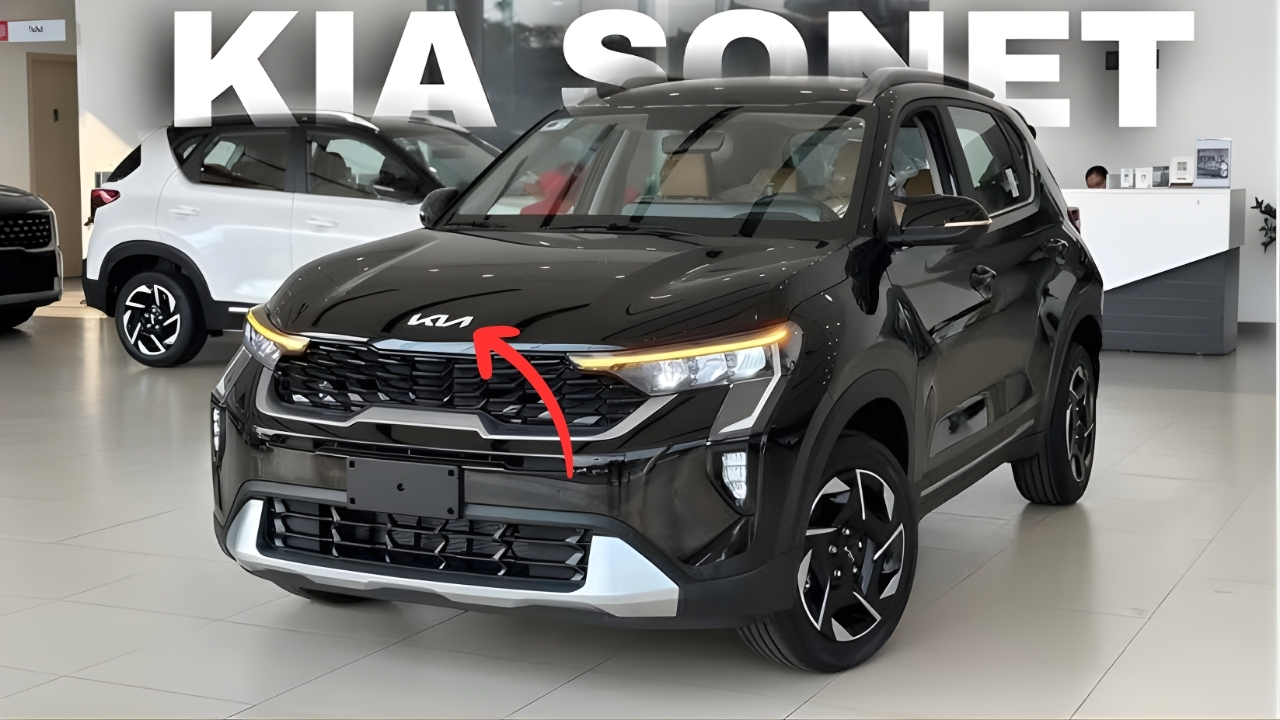
Styling and tech that punch above segment expectations
From the outside, the refreshed Sonet sticks to Kia’s current “Opposites United” design language, but with a more mature, SUV‑like stance than many rivals.
The front end now features a bolder grille, L‑shaped LED headlamps with integrated DRLs, and a more sculpted bumper that give it a pricier, almost crossover‑like presence.
Inside, the cabin is where the Sonet truly distances itself from cheaper compact SUVs. Top trims offer a dual‑screen setup with a digital instrument cluster and a floating 10.25‑inch touchscreen, coupled with an electric sunroof, ventilated front seats, and a 360‑degree camera with Blind View Monitor.
Kia also pushes “Kia Connect” with over 70 smart features, from remote lock‑unlock and vehicle status to destination send and emergency SOS, making the Sonet feel more like a connected lifestyle gadget than a budget SUV.
Safety credentials and driver‑assistance features
Kia has made safety a core part of the Sonet’s pitch, especially in higher trims. The SUV comes with a “15 Hi‑Safety” package that includes essentials like dual front airbags, ABS with EBD, ESC, and multiple crash‑protection structures, covering the fundamentals expected in modern buyers’ minds.
Also Read: OnePlus 15 5G powerful gaming processor smartphone comes with 512GB storage, design is fabulous
Beyond basics, certain variants add ADAS Level 1.0, which brings features such as forward‑collision warning, lane‑departure warning, and driver‑attention alert.
For a car starting below ₹7.5 lakh ex‑showroom, the fact that several top‑end Sonet trims thumb their noses at their rivals with advanced safety and driver‑assistance tech is a major competitive edge.
Pricing and affordability in the current market
After India’s GST adjustments late last year, Kia rejigged the Sonet’s price ladder, making the entry‑level diesel and petrol variants more accessible.
Ex‑showroom prices now stretch from roughly ₹7.30 lakh to about ₹15.69 lakh, depending on engine, transmission, and trim level.
The MY26 automatic entries sit strategically in the ₹9.78–₹9.89 lakh ex‑showroom band, giving buyers a clear path into features‑rich versions without breaching the double‑digit mark.
When you factor in available schemes, ex‑showroom discounts, and longer warranty options—Kia has even offered extended coverage up to seven years—the Sonet’s value equation improves further for long‑term ownership.
How competitors are forced to respond
The Sonet’s 2026 update puts direct pressure on rivals like the Tata Nexon, Maruti Suzuki Brezza, Hyundai Venue, and Mahindra XUV300.
Also Read: Samsung Galaxy Z Fold7 5G Next-Gen foldable phone, 200MP camera and 7.6-Inch display
Where others often charge a hefty premium for automatic gearboxes, Kia’s move under ₹10 lakh automatically redefines buyer expectations: “automatic should not be a luxury add‑on.”
At the same time, Kia’s aggressive feature list—especially in terms of screens, connectivity, and certain safety tech—makes top‑end Sonet variants feel a cut above many rivals’ plusher trims.
For Tata, Maruti, and Hyundai, this signals a need to either match Kia’s tech/spec while keeping prices in check, or risk ceding fresh buyers to the Korean brand.
Kia Sonet : Why the Sonet still feels relevant in 2026
Four years into its life cycle, the Kia Sonet continues to sell strongly, regularly clocking high monthly volumes in a fiercely competitive segment.
Its success stems less from any one radical gimmick and more from a steady diet of updates: design tweaks, new colours like the recently added Magma Red, expanded automatic options, and sharpened pricing.
For buyers in cities such as Delhi, Mumbai, and Bengaluru, the MY26 Sonet represents a compelling blend of daily usability, low running costs, and a surprisingly premium feel.
Also Read This : MG Hector 2026 Bold design SUV with ventilated seats and 18 inch alloy wheels
As automatic penetration rises and consumers demand more tech and safety, Kia’s decision to drop the Sonet’s automatic gateway price under ₹10 lakh may well prove to be the stroke that keeps this compact SUV firmly in the spotlight for years to come.